Nobody knows anything
But if you try sometimes...

Here are some things I noticed this week about the business of making art, and the creative spirits that drive it, while on a trip in the US.
First stop, Chicago - I caught Toronto’s “The Rural Alberta Advantage” at a venue called “The Empty Bottle”.
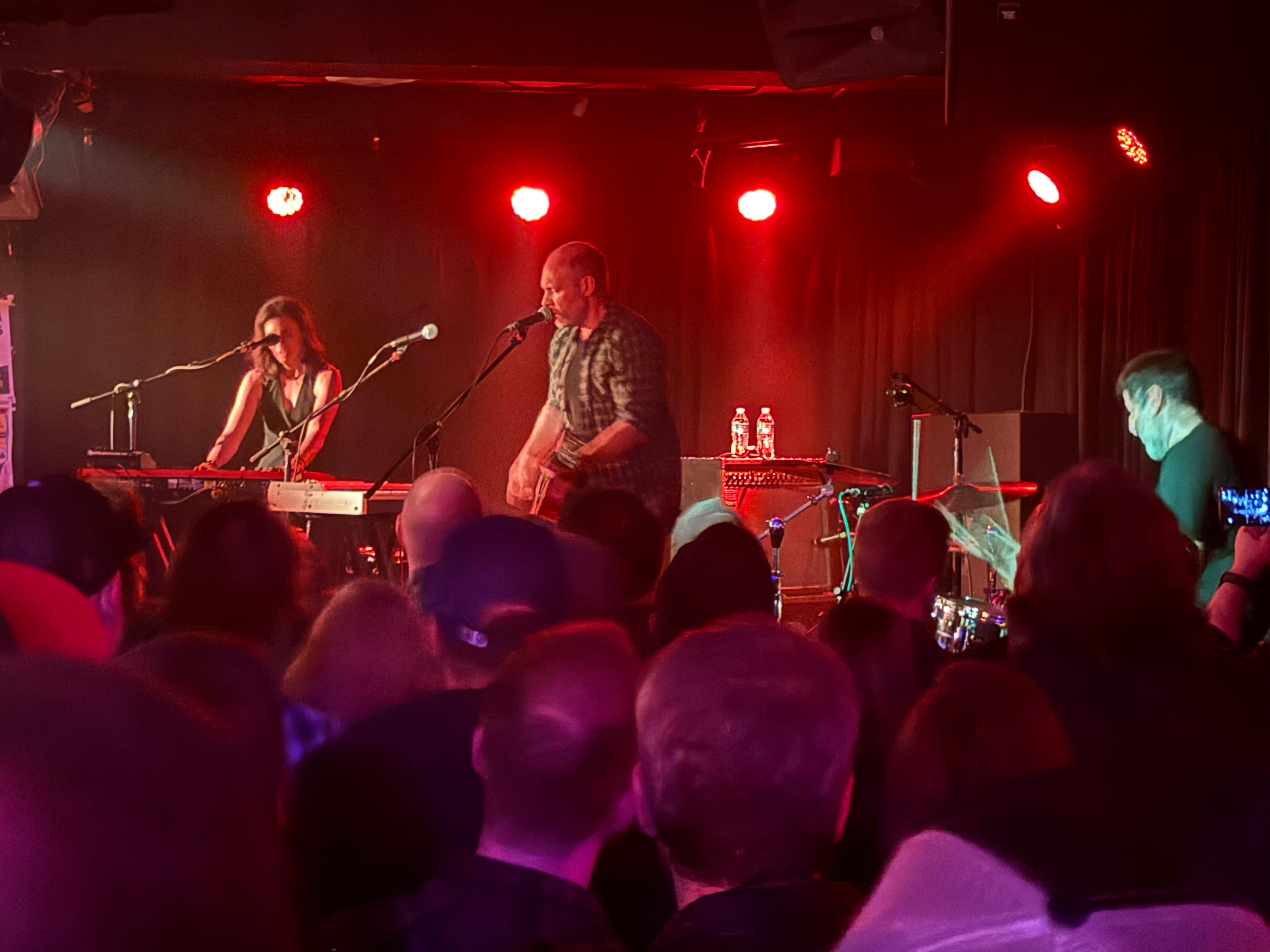
It was sold out weeks in advance, and the fans seemed to know nearly all the words to every song.
The RAA doesn’t have a massive online presence, but they convert those people into FANS at a very high rate. As has been pointed out (1 million monthly listeners, 12 tickets sold), 75,000 Spotify streams is the financial equivalent of one real person buying a concert ticket, a t-shirt, and some vinyl.
People don’t drink that much anymore - a few of the thirty-somethings were quaffing craft beers, but lots were sipping water. A guy next to me asked his buddy mid-set if he wanted a matcha from the bar.
Jayzus.
I felt for the venue - in the old days, a big crowd would have run a huge tab. But there was a long lineup at the merch table, and a palpable sense of pleasure as the crowds filtered out onto the street. A great gig leaves a warm glow, even without substances.
Travelled on to Missoula, Montana, for the Big Sky Documentary Festival. I have been able to catch a few documentaries here that seem to follow that same model, where the market for non-commercial subjects is similar to that for independent music. The economics might be tough, but the audiences love the product.
“Bend in the River,” the sold-out opening film of the festival, is the kind of film people often imagine when they think of an auteur documentary. A filmmaker starts capturing a group of his friends just after college. Then he returns to them in middle age, and then in old age. Think Michael Apted, except with hippies.
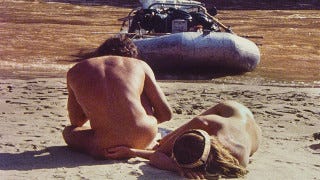
There is no economic rationale for a film like this. It evolved, haphazardly, over decades. The filmmaker changes along with the subjects, who go from beautiful young people to gradual survivors of the shit life throws at all of us. It feels more authentic and surprising than most fiction because its characters are never reduced to vehicles of the storymaker’s agenda.
A woman sitting next to me in the theatre, roughly the same age as the subjects, confided to me before the movie started. “Oh, you’re Canadian. I’m so sorry. (Pause). We’ve screwed up here in America, and I blame my generation. We thought we could have it all, get rich, be green. We fucked up.”
Later, one of the characters in the film muses: “We screwed up, we have to be remembered for more than salad bars and Bill Clinton.” Huge laughs of recognition from the audience.
We are all, as culture makers, encouraged to scale - that’s where the money is. But people keep making music and films that answer to the real need of art, to see the world in a fresh way that affirms our humanity.
Had a coffee with a local filmmaker, who lives just outside Missoula on a reservation “the size of Connecticut”.
How’s the industry here? Well, she said, funding is nearly non-existent. She’s shooting a short with a Hollywood star and calling in favours because the celebrity is attached. Like you guys in Canada, she said, we have tax credits, but the success of the whole “Yellowstone” universe has sucked up all the state funding into the 2030s. Still, she’s undeterred, even quit her day job a few years ago so she could concentrate on making films full-time.
Of course, if you’re a fan of “Yellowstone”, you know that Taylor Sheridan reinvented the Western at a time most people thought the genre was dead. He is now a very rich man, likely more than $100 million and counting.
This has always been the way for the great, scalable economic successes: they start with a stubborn, unique vision. And hits are born because people see something new and really, really love it.
Walking back to my hotel, I saw a couple of signs in the windows (Missoula is a super liberal college town).
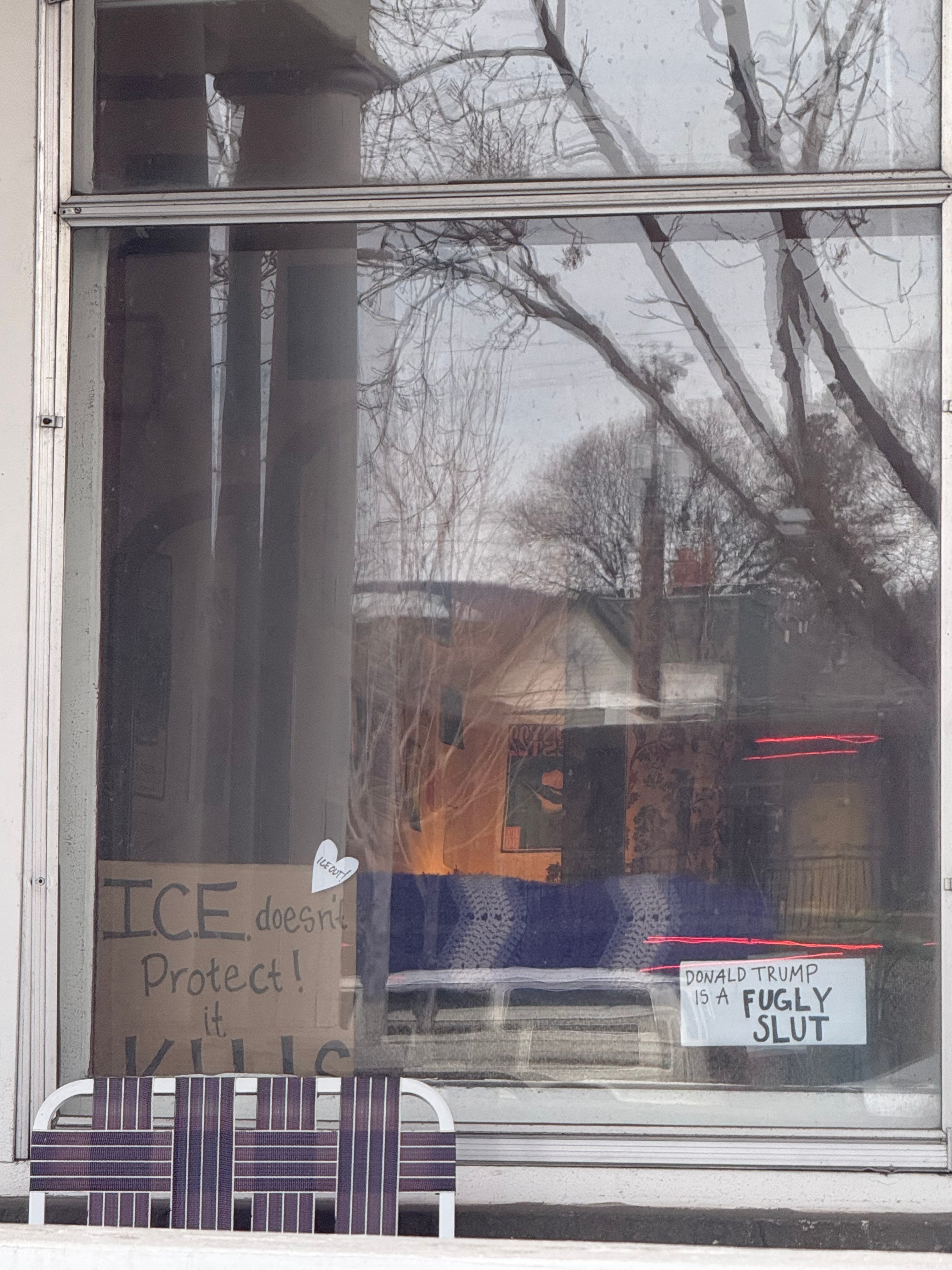
I love that little “Ice Out” heart.
My friends and family often mock my natural optimism, but there’s something beautiful in being reminded we are not alone. And sometimes, in the creative business, you just gotta keep plugging away and make your own luck. And hearts.
Love this thanks Stu